Discipline · Agyat Vyakti
The Only Discipline That Works Is the One You Build in the Dark
Agyat Vyakti · April 2026 · ~2,000 words
On the difference between performing discipline and actually having it.
There is a version of discipline that looks good on Instagram. It has a 5am alarm, a cold shower, a journal page filled before the city wakes up. It has a weekly check-in post and a streak counter and, eventually, a before-and-after photo. This version of discipline is real — it produces results, for a while — but it is also fragile in a specific, predictable way: it depends on being seen. On the streak being visible. On the narrative continuing to have an audience.
The day the audience stops watching, this version of discipline quietly collapses.
There is another version. It has no alarm aesthetic. It has no before-and-after. It is built in private, practiced in the dark, maintained on days when nothing about it is rewarding and no one would know if you skipped it. This version is less photogenic. It is also the only one that lasts.
This essay is about the difference.
What Discipline Actually Is (And Isn’t)
Most people confuse discipline with motivation. They are not the same thing, and treating them as interchangeable is the source of most failed attempts at self-change.
Motivation is a feeling — a surge of energy and clarity that makes action feel easy and obvious. It is real, it is useful, and it is completely unreliable as a foundation for anything that requires sustained effort. Motivation is weather. You cannot build a house on weather.
Discipline is a structure. A system of behaviors that runs independent of how you feel on a given morning. It is what happens after the motivation has faded — after the initial excitement of a new goal has died down, after the novelty has worn off, after the days have begun to feel repetitive and the progress has become too gradual to see.
The simplest working definition of discipline: doing the necessary thing on the days when you do not feel like doing it. Not most days. Especially those days. The days when the feeling is absent and the behavior happens anyway — those are the days that build something real.
The Problem with Public Discipline
Public accountability is a legitimate tool for behavior change. Research supports it. Telling people about your goals, joining communities of people with similar intentions, sharing progress — these things genuinely help, particularly in the early stages of a new behavior.
But public discipline has a hidden failure mode that rarely gets discussed honestly: social reward can substitute for the actual goal.
This is the mechanism: you set out to build a reading habit. You join a reading challenge, share your progress publicly, get positive responses when you post your monthly count. The social validation — the likes, the comments, the sense of belonging — becomes its own reward, independent of whether the reading itself is enriching you. And then, quietly, the social reward starts doing the work that the habit was supposed to do. The goal has shifted from reading deeply to posting about reading. The form has replaced the substance.
This happens with exercise. With writing. With meditation. With any practice that has a visible social signal attached to it. The discipline looks intact from the outside. From the inside, it has hollowed out.
The discipline that survives this failure mode is the one that was never primarily public.
Why the Dark Matters
When there is no audience, no streak counter, no public accountability — when you are in your room on a Tuesday night with no particular reason to do the thing and no external consequence for skipping it — what happens in that moment is the real measure of your discipline.
This is the moment most people avoid thinking about. Because in this moment, there is no motivation to lean on, no social reward to harvest, no narrative of progress to sustain you. There is only the question: am I the kind of person who does this, or am I the kind of person who waits to feel like it?
The answer you give to that question, in private, repeated daily, is how identity is actually formed. Not through public declarations. Through private behavior. Through the small choices that no one will ever audit.
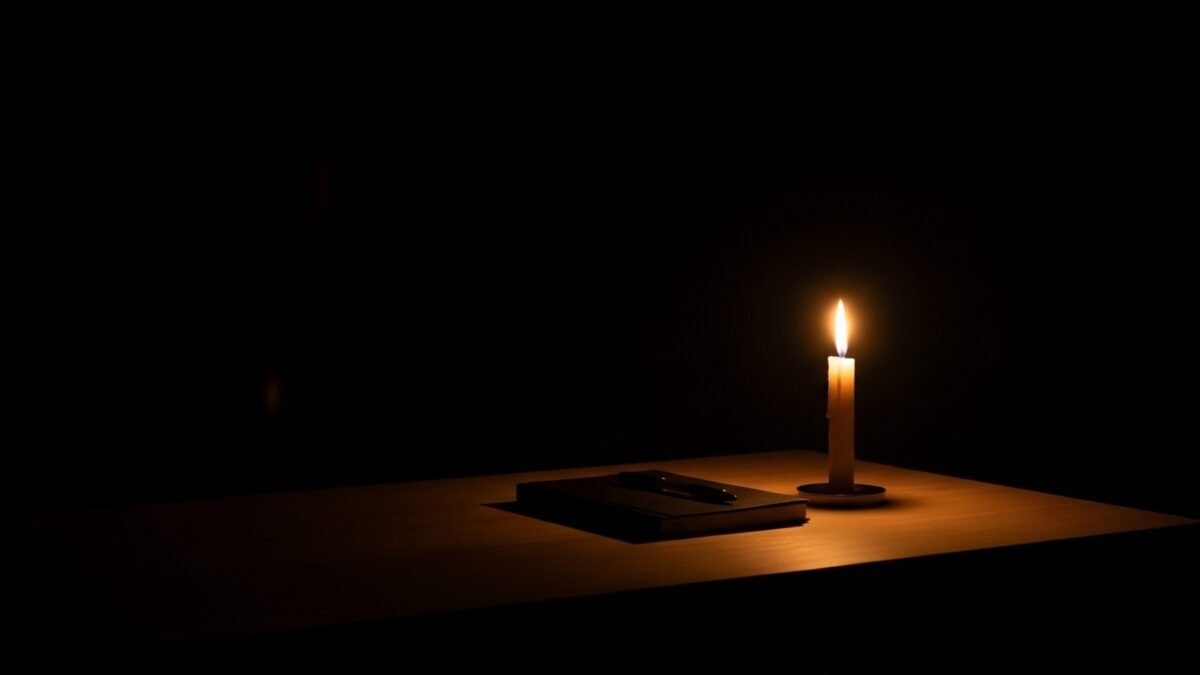
This is what “building discipline in the dark” means. Not literally darkness — metaphorically, the absence of external observers. The practice done when the only witness is yourself.
And here is the thing that discipline practitioners understand and people who merely perform discipline do not: the private practice is more valuable, not less, because of its privacy. Because it requires you to be the source of the motivation rather than harvesting it from an external environment. Because it strengthens the neural circuitry of self-direction rather than the neural circuitry of social performance.
The Architecture of Real Discipline
If discipline is not motivation, and its power comes from privacy rather than publicity, then how is it actually built? Not through force of will — willpower is finite and depletes across the course of a day. Not through inspiration — that comes and goes. Through something more architectural.
01. The non-negotiable minimum.
Real discipline is not built on ambitious targets. It is built on floor behaviors — the minimum version of the practice that you commit to on any day, regardless of circumstance. Not the ideal version. Not the full version. The version that is so small it requires almost no willpower to execute.
The writer who wants to write every day does not commit to 1,000 words. They commit to opening the document and writing one sentence. The person building an exercise habit does not commit to an hour at the gym. They commit to putting on their shoes.
This is not laziness. This is architecture. The non-negotiable minimum exists to preserve the streak on bad days, which preserves the identity, which makes the better days more likely. On most days, starting the thing leads naturally to doing more of the thing. The floor behavior is the door. What matters is that you open it.
02. The removal of decision points.
Willpower is depleted by decisions, not just by actions. Every time you have to decide whether to do the thing — while it is still a live question, still genuinely uncertain — you expend a small amount of finite self-regulatory resource. This is why decisions about discipline, made in advance and not revisited, cost less than decisions made in the moment.
The person who has decided I exercise on Monday, Wednesday, Friday at 7am does not make a decision on those mornings. The decision was already made. The behavior is on autopilot, not because they have become robotic, but because they have invested the decision-making once and are now running on the infrastructure that decision created.
Remove decision points from your disciplines wherever possible. The habit happens at this time, in this location, in this sequence, always. Variation is the enemy of automatic behavior.
03. The tolerance for the boring.
This is the one nobody says enough. Discipline, at full maturity, is boring. The 90th day of the practice looks exactly like the 10th day and feels a great deal less exciting. The motivation is long gone. The novelty has evaporated. What remains is a person doing a repetitive thing for reasons they believe in, without any emotional reward in the moment.
This is the state that produces compounding results. This is the state that separates people who build things from people who start things. And it is a state you have to consciously choose to be comfortable with, because nothing in the contemporary environment rewards it. The environment rewards starting. It does not reward the quiet persistence of the middle.
The middle is where discipline lives. The beginning is where motivation lives. Motivation gets you started. Discipline gets you through the middle.
The Trap of Measuring Discipline by Outcome
One more failure mode that destroys real discipline: measuring it by results rather than by behavior.
When you measure discipline by outcome — by the weight lost, the pages written, the revenue generated — you are at the mercy of variables you do not control. Weight plateaus. Some writing sessions produce nothing usable. Revenue has external dependencies. When the outcome stalls, and it always does at some point, the discipline feels like it has failed — even if the behavior has been flawless.
This is a measurement error. It produces the most painful kind of discipline failure: the person who was doing everything right, who quits because the results weren’t visible yet.
Measure discipline by behavior, not outcome. Did you do the thing on the days you committed to doing it? Yes or no. That is the only meaningful metric during the building phase. Outcomes are a lagging indicator — they come later, they compound over time, they become undeniable at scale. But they cannot be your daily measure, because they are not under your daily control.
Your behavior is. Measure that.
A Confession
Here is the honest thing, from an unknown person to whoever is reading this at whatever hour it is for you:
Most of us know what we should do. The internet has provided approximately unlimited guidance on diet, exercise, reading habits, sleep hygiene, meditation, journaling, and productivity systems. The information is not the bottleneck.
The bottleneck is Tuesday evening when nothing is urgent and nothing is rewarding and the easier thing is always available. The bottleneck is the private moment. The one where no one is watching and the choice is genuinely yours.
What you do in that moment, repeated across enough Tuesdays, is who you become. Not who you post about becoming. Who you actually become.
That is the discipline that matters. The one built in the dark, in the quiet, in the unremarkable private middle of an ordinary week. It will not make a good post. It will, over time, make a good life.
“The habits that shape you most are not the ones you perform for an audience. They are the ones you maintain when the audience has gone home and the screen is dark and there is only you, and the choice, and the quiet.”
— Agyat Vyakti
agyatvyakti.com · Discipline · April 2026
Every word belongs to no one. Every word belongs to you.