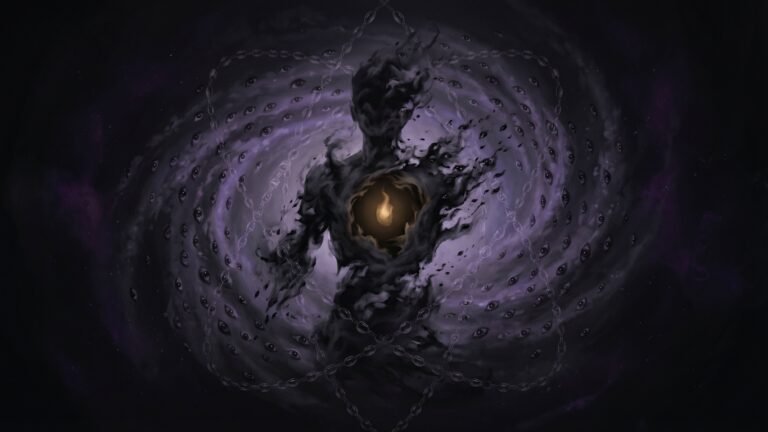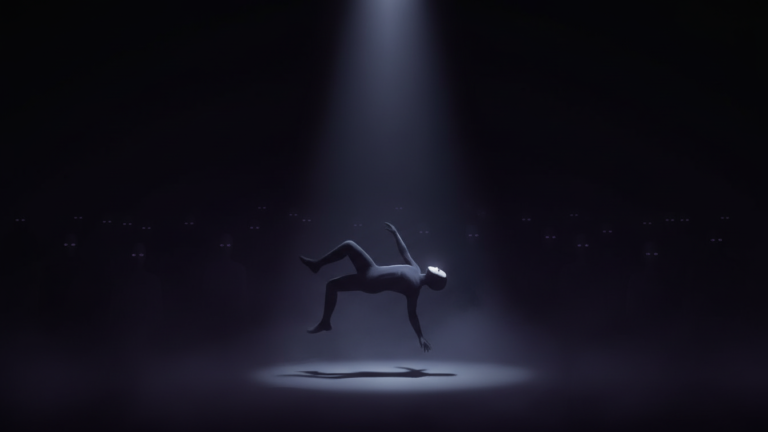
You don’t know why. That’s the part nobody believes. There is no reason — no exam tomorrow, no fight pending, no disaster approaching. And yet the body is bracing. The chest is slightly tight. The mind is running a simulation of something terrible that hasn’t happened and probably won’t. You are, as far as anyone can tell, fine. You don’t feel fine.
India has a word for this. Overthinking.
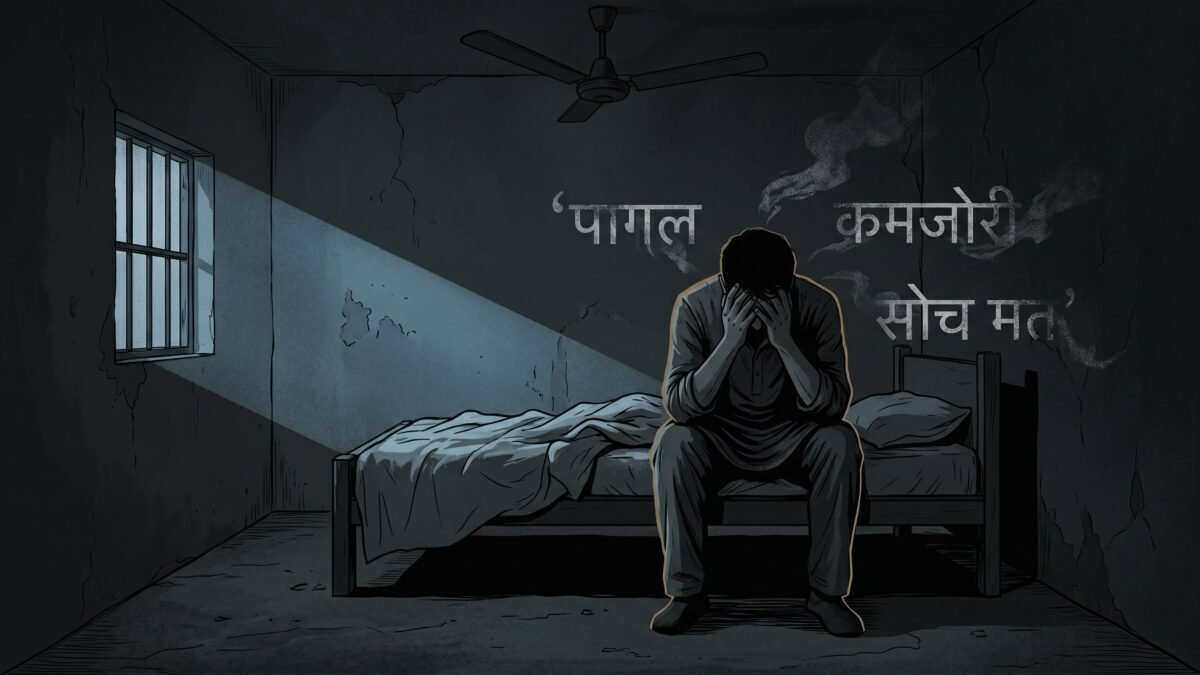
It is offered as diagnosis, as dismissal, and occasionally as accusation. “Itna mat socha karo.” Don’t think so much. As though the solution to a fire is to disagree with its existence. As though the nervous system can be reasoned with through a tone of mild irritation.
The word overthinking implies agency. It implies that you are choosing to think, choosing to spiral, choosing the 3AM ceiling-stare as a kind of hobby you’ve developed. It places the responsibility exactly where India most likes to place it: on the individual, as a failure of will.
There is a more accurate word. It is anxiety. And it doesn’t need a reason.
The Numbers
Increase in mental health-related Google searches in India in 2024.
The top searched term: anxiety. Not “how to be happy.” Not “how to succeed.” Anxiety.
Forty-one percent more people in India typed their distress into a search bar last year than the year before. This is not a mental health awareness campaign working. This is a country quietly drowning, turning to an algorithm because it cannot turn to anyone else.
The searches are specific. “Why do I feel scared for no reason.” “Anxiety attack symptoms India.” “Why does my heart beat fast when nothing is happening.” These are not philosophical questions. These are people describing physical experiences they cannot explain and have not been given language for.
What Anxiety Actually Is
The body that learned to be afraid before the mind did
Anxiety is not a thought problem. This is where India’s overthinking framework fails at the first step. Anxiety is a nervous system state — a physiological condition in which the body’s threat-detection system activates in the absence of a verifiable threat.
The amygdala — a small, almond-shaped structure that functions as the brain’s alarm system — does not read calendars. It does not check whether there is actually a reason to be afraid. It responds to patterns, to memories, to learned associations, to chronic stress accumulated over months and years. When it fires, it sends a cascade of signals through the body: cortisol, adrenaline, elevated heart rate, muscle tension, shallow breathing. The body prepares for an emergency that isn’t there.
This is the experience people are Googling at 2AM. Not a thought. A state.
“Why am I anxious for no reason?” — The question itself contains India’s misunderstanding. There is always a reason. The reason is just not visible, not recent, and not what India would consider acceptable evidence of suffering.
The Anatomy of “No Reason”
When someone says they feel anxious for no reason, they typically mean one of several things:
The reason exists in the nervous system’s accumulated history — years of stress, chronic pressure, unprocessed events — but not in the current moment. The body is responding to a pattern, not a present fact.
The brain has learned, often in childhood, that the world is unpredictable or unsafe. That learning doesn’t disappear when circumstances change. It runs in the background, always scanning.
For people who have been anxious for long enough, the baseline is already elevated. There doesn’t need to be a new trigger. The trigger was never resolved. It simply became the floor.
The reason exists but has been minimised so consistently — by the person, by their family, by their culture — that they no longer recognise it as a reason. India is particularly effective at teaching people that their suffering does not qualify.
What India Says vs What Is Actually Happening
| What India says | What is actually happening |
|---|---|
| “Itna mat socha karo” — don’t overthink | The nervous system is in a sustained threat-response state that thinking cannot override |
| “Kamzori hai, mann strong karo” — you’re weak, strengthen your mind | Anxiety is a neurobiological condition. Willpower addresses behaviour, not physiology. |
| “Koi reason nahi hai — sab theek hai” — there’s no reason, everything is fine | The reason may be invisible to everyone else and still be real. Invalidation accelerates the spiral. |
| “Phone band karo, bahar jao” — put your phone away, go outside | Behavioural change can support recovery. It cannot substitute for addressing the underlying state. |
| “Pray. Meditate. Be grateful.” | These practices have documented value. They are also not the same as treatment. They do not cure anxiety disorder. |
Why India Specifically Cannot Accept “No Reason”
The suffering that does not qualify
India is a country built on visible, quantifiable hardship. Farmers lose crops. Workers lose jobs. Families lose members. These are reasons. These are acceptable. Against this backdrop, a person who has food, shelter, a functioning body, and no immediate crisis — and who is nonetheless suffering — presents a category problem.
If there is no reason, there is no legitimacy. If there is no legitimacy, there is no treatment. If there is no treatment, the person is told to adjust. India has industrialised the process of telling people their suffering does not qualify.
Treatment gap for mental health disorders in India.
Of every 100 people who need help — 84 never receive it.
Many of them spent years being told they were just overthinking.
The treatment gap is not only structural — not only about the absence of psychiatrists or the cost of therapy. It is cultural. It is built into the language. Overthinking is not a neutral word. It is a dismissal dressed as diagnosis. It tells the person that what they are experiencing is not something that happened to them but something they are doing to themselves — and therefore something they can simply stop doing.
They cannot simply stop.
“You cannot think your way out of anxiety any more than you can think your way out of a broken bone. The body is not listening to that argument.”
The Person at the Other End of the Search
Someone in India right now — tonight, probably — typed “why do I feel anxious for no reason” into Google. They are not searching for philosophy. They are searching for permission.
Permission to acknowledge that what they feel is real. Permission to have it taken seriously. Permission to not be told, one more time, that they are weak, or dramatic, or choosing this.
They are likely between 18 and 30. They are likely in a city, or trying to reach one. They are probably high-functioning — doing well enough by every visible metric that no one around them would believe them if they said they were struggling. They have possibly been struggling for years. They have possibly told someone once and been told to “think positive.” They have not told anyone since.
India has created a specific kind of loneliness — the loneliness of suffering in a culture that has decided your suffering is a choice.
There is a reason you feel anxious. You may not be able to name it. That doesn’t make it smaller. It makes it harder to find.
India will call it overthinking. The word for what it actually is has been available for decades. We have simply declined to use it — because using it would mean acknowledging that something is wrong, that something needs addressing, that the person asking deserves an answer other than soch mat itna.
The search bar doesn’t judge. It just returns results. For millions of people in this country, that is the only place they feel safe enough to ask.