You Don’t Fear Failure —
You Fear Being Seen Failing
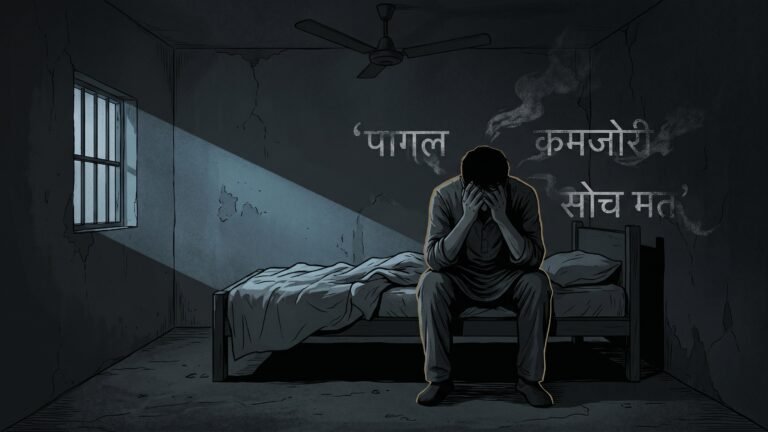
The failure itself doesn’t break you. What breaks you is imagining the look on their faces when they find out.
Think about the last time you didn’t try something. Really think. Was it because you thought you’d fail? Or was it because you could already see the audience — the people who would know you failed?
There’s a difference. And most people never examine it closely enough to see it.
We call it “fear of failure.” We build entire self-help industries around it. We read about resilience, about learning from mistakes, about how failure is just feedback. And yet — we still don’t try. The books don’t help. The podcasts don’t help. Because we’ve been treating the wrong disease.
The real name of what you feel isn’t atychiphobia — fear of failure. It’s something older, deeper, and far more social. It’s the terror of being witnessed in your inadequacy. It’s the fear of the audience.
The sociologist Erving Goffman had a theory. He said all social life is a performance. You are always on stage. There is always a front stage — where you perform for others — and a back stage — where you are actually yourself. And the great, unspoken anxiety of being human is that the audience might see backstage.
“The individual must rely on others to complete the picture of him of which he himself is allowed to paint only certain parts.”
— Erving Goffman, The Presentation of Self in Everyday Life (1959)
You have been performing since you were old enough to understand that people were watching. You learned which version of yourself got applause, which one got silence, which one got the look — that particular look of disappointment or pity that can ruin a week.
And somewhere along the way, failure stopped being an event and became a costume. A costume people could see. A costume that would replace the one you’d carefully built.
You are not afraid of falling. You are afraid of falling in front of someone. The empty forest floor doesn’t scare you. The crowd does.
Psychologists have a name for a specific cognitive distortion: the imaginary audience. It was first described in adolescents — that stage where you are convinced the entire world is watching your every move, cataloguing your embarrassments, discussing your failures.
We assume adults grow out of it. We don’t. We just get better at hiding it.
David Elkind, the developmental psychologist who coined “imaginary audience” in 1967, originally framed it as adolescent egocentrism. But subsequent research has consistently found that this phenomenon persists into adulthood — particularly in high-stakes situations involving social evaluation.
A 2011 study in the Journal of Personality and Social Psychology found that adults consistently overestimate how much others notice and remember their failures — a bias researchers call the “spotlight effect.” We believe we are always under more scrutiny than we actually are.
The imaginary audience sits in your chest during every important moment. It is there when you’re about to pitch an idea in a meeting. It is there when you consider starting a business. It is there when you want to say something honest and your throat closes.
It is made up of people you know. People you barely know. People you haven’t spoken to in years. And sometimes — most disturbingly — people who are already dead.
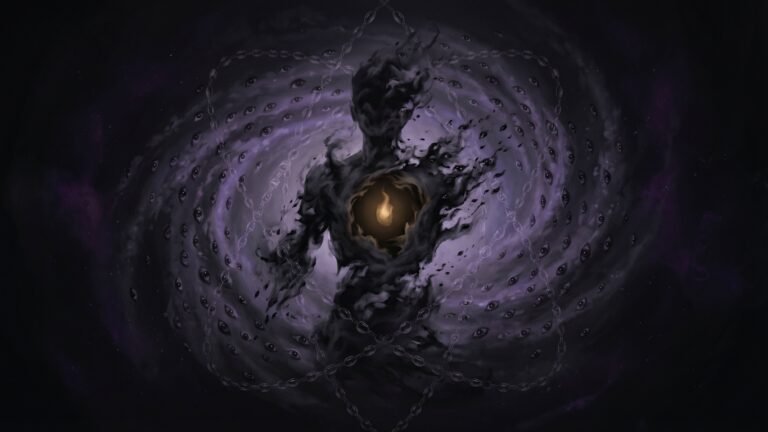
You are performing for ghosts.
Failure is private data.
Being seen failing is public identity.
You can survive the first.
Your ego believes it cannot survive the second.
This is where most psychology gets muddled. People conflate shame and guilt, use them interchangeably. But they are not the same thing. They live in different parts of the self and they do different damage.
Guilt is about the action. It is discrete, bounded, survivable. Guilt can motivate repair. You feel guilty, you make amends, you move forward. Guilt has an exit.
Shame is about the self. It is totalizing. There is no discrete action to repair because the problem is not what you did — it is what you are. And when failure becomes shame, it stops being a moment and becomes an identity.
The fear of being seen failing is the fear of shame, not guilt. It is the fear that your failure will not be interpreted as an isolated event but as evidence — proof — of something fundamentally insufficient about you.
“Shame is the intensely painful feeling or experience of believing that we are flawed and therefore unworthy of love and belonging.”
— Brené Brown, Daring Greatly
And here’s the cruel architecture of it: the people most afraid of being seen failing are usually the people who have built the most impressive-looking lives. Because they have the most to protect. Because the gap between the performance and the reality is widest. Because they know, somewhere beneath everything, that the image is fragile.
The more curated your surface, the more catastrophic any crack feels. You haven’t been building a life. You’ve been building a defence.
This fear is ancient. But the modern world gave it a new, infinite stage.
Before the internet, your audience was physically limited. Your failure could be witnessed by your family, your neighbourhood, your workplace. That was already devastating enough. But there was a ceiling. There was geography. There was forgetting.
Now there is no ceiling. No geography. No forgetting.
Every attempt is potentially public. Every failure is potentially permanent. Every person who knew you before your failure can watch its aftermath in real time. The spotlight effect — already distorting your reality — is now amplified by an actual spotlight that never turns off.
- 01You don’t start the YouTube channel because you can already imagine the comments. The low view count sitting there, public, readable by anyone.
- 02You don’t apply for the position because your LinkedIn shows where you work now, and if you fail the interview, the contrast will be visible.
- 03You don’t share the creative work because once it exists publicly, it can be ignored publicly — and public indifference is its own humiliation.
- 04You don’t speak the honest opinion because screenshots exist, and context doesn’t, and you know how quickly an audience turns.
None of these hesitations are about whether you’ll succeed or fail. They’re about who will see it happen.
Here is the part that cuts deepest — and the part most psychology content is too careful to say directly:
The identity you are protecting through all of this? It was never real to begin with.
The “competent you,” the “together you,” the “person who has it figured out” — that is a construction. It is a story you have been telling consistently enough that others have started to believe it, which made you believe it, which is the only reason it feels solid enough to be worth protecting.
You are guarding a fiction. And you are paying for this guard duty with your actual life — with the attempts not made, the work not shown, the truth not spoken.
“Man is condemned to be free.” And in that freedom, he invents himself — and then becomes a prisoner of his own invention.
— Jean-Paul Sartre (interpreted)
Sartre had another line. “Hell is other people.” It is usually misread as misanthropic. It is not. It means: your self-consciousness — your suffering about how others see you — is a particular kind of hell. The gaze of others traps you in an image of yourself that you then spend your entire life either maintaining or running from.
You built the prison. You handed them the key. And then you called yourself afraid of failure.
So what actually happens if they see you fail?
Not the catastrophic imagined version. The real version. What actually happens?
Some people update their image of you. Most people think about it for less than 24 hours before their own anxieties reclaim their attention. A few people feel a private relief — because your fallibility makes them feel safer about their own. Almost no one’s life is meaningfully changed by witnessing your failure.
The audience you are performing for is mostly watching their own performance. They do not have the bandwidth to monitor yours as closely as you fear.
The most terrifying realization is not that people will judge you. It’s that most of them won’t even notice. You have been optimizing your entire life around an audience that was never paying as much attention as you thought.
This should be liberating. For most people, it is briefly liberating, then quietly devastating — because if the audience wasn’t watching that closely, then what were you performing for? What was the cost of all that hiding, all that careful management, all that not-trying?
The loss becomes real only when you realize the fear was mostly imagined.
You don’t fear failure.
You fear the face of someone you respect going blank when they hear about it.
You fear the updated story they’ll tell about you.
You fear that their new version of you might become the true one.
Name it correctly.
Because you cannot fight a war you’ve misidentified.
And you cannot be free while you’re still performing for a crowd that’s mostly watching itself.