Inner War · Psychology · Self
The War You Are Losing
Without Even Knowing
You Are in It
ON THE SILENT CONFLICT THAT NEVER MAKES THE NEWS — AND NEVER LEAVES YOU ALONE

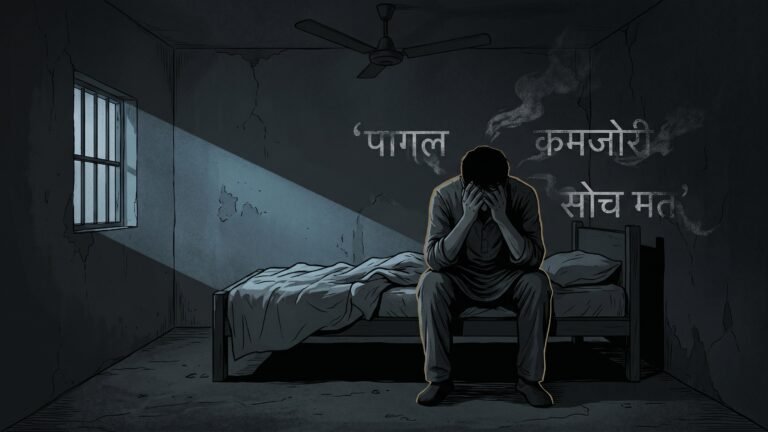
Nobody declares this war. There is no moment of announcement, no drumroll, no clear enemy stepping into the light with a face you can name. One day you are simply living. And then, at some point you cannot quite locate in memory, you are at war with yourself — and you don’t know when it started, and you can’t remember a time when it wasn’t happening.
This is the inner war. Not metaphor. Not poetry. A real, sustained, physiologically measurable conflict — between the version of you that wants to grow and the version of you that is terrified of what growth costs. Between the self that knows better and the self that keeps doing the same thing. Between who you are at 9am when the day is full of possibility, and who you are at 2am when everything you’ve avoided comes looking for you in the dark.
Most people lose this war quietly. Not dramatically. Not with a single defeat. They lose it slowly, in increments so small they mistake the loss for normal life.
The Anatomy of the Conflict
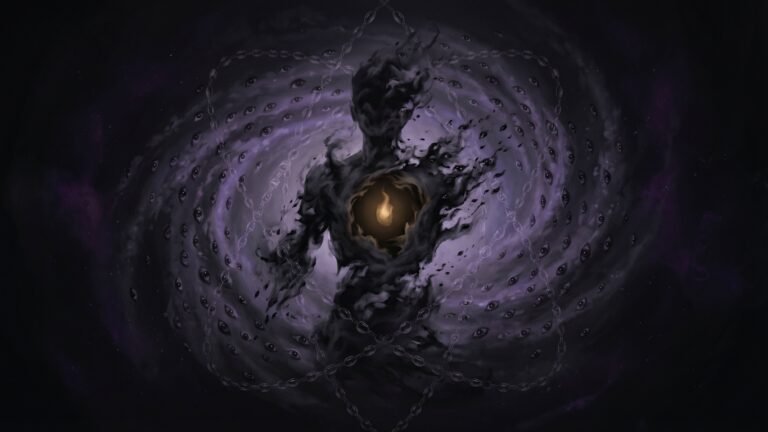
Every inner war has the same basic structure, even if it wears different faces for different people. There is the part of you that wants — that has aspirations, hungers, a vision of a life that feels more real, more yours, more honest. And there is the part of you that resists — that is addicted to the familiar, that confuses comfort with safety, that has learned, through a thousand small betrayals, to distrust its own wanting.
These two forces do not negotiate. They do not sit across a table from each other and reason. They fight. And the fighting is exhausting in a way that has no equivalent — because you cannot rest from a war that is happening inside the only body you have to live in.

What the Research Actually Says
Psychologists don’t call it the inner war. They have cleaner language. They call it cognitive dissonance, ego depletion, internal family systems conflict, the gap between actual and ideal self. But strip away the clinical language and what you find underneath is exactly what you already know from your own nights: the mind is not a unified thing. It is a parliament of competing voices, and most of the time, it is not a very functional parliament.
Neuroscience offers one way to understand this. The prefrontal cortex — the part of you that makes plans, sets goals, reasons about the future — and the limbic system — the part of you that responds to threat, craves reward, and stores fear — are in constant negotiation. When you wake up and decide today is the day everything changes, that is your prefrontal cortex speaking. When you open your phone instead and lose an hour without knowing why, that is your limbic system winning the vote.
Neither side is wrong. That’s the thing nobody tells you. The resistance is not your enemy. It is your nervous system doing exactly what it was built to do: protect you from anything that feels like danger. The problem is that growth feels like danger. Change feels like threat. Even becoming who you want to be feels, to the ancient part of your brain, like stepping off a cliff.
of adults report chronic internal conflict between who they are and who they want to be
average daily mental energy lost to self-criticism and internal narrative loops
the hour most cited by people as when the inner war becomes impossible to ignore
The Five Stages of the Conflict
The inner war doesn’t stay the same. It evolves. Most people cycle through the same five stages, sometimes over years, sometimes over the course of a single sleepless night.
Why You Keep Losing
Here is the part nobody says out loud: most people are not losing the inner war because they are weak. They are losing it because they are fighting it with the wrong weapons.
The conventional prescription is willpower. Just decide. Just commit. Just push through. This advice is not wrong exactly. It is just catastrophically incomplete. Willpower is a finite resource. Neuroscience has established this so thoroughly that it barely counts as news anymore. You cannot willpower your way out of a nervous system that has been trained, for years, to equate change with danger.
What actually shifts the war — what the research on lasting change actually points to — is not force but understanding. Not suppression but integration. The resisting self does not need to be defeated. It needs to be heard. Not obeyed. Not surrendered to. But heard — because it is carrying something real: the memory of every time you tried and fell, every time you were seen and hurt, every time the thing you reached for was taken away.

The Thing That Actually Helps
There is a question that changes things. Not a therapy question, not a self-help question — just a real, honest question you ask yourself when you are brave enough to sit still with the discomfort:
What is the resistance protecting me from?
Not: why am I so weak. Not: what is wrong with me. But: what real thing, what actual wound, what legitimate fear is this part of me trying to shield? Because the resistance — the procrastination, the self-sabotage, the endless loop of almost-but-not-quite — is not random. It is purposeful. It is a guard standing at a door, and that guard has a reason for being there, even if the threat it was posted to protect against stopped being real years ago.
When you ask that question and sit with the answer — actually sit, not scroll away, not eat away, not sleep away — something begins to shift. Not dramatically. Not permanently, not all at once. But the war gets quieter. Not because one side wins. Because you finally stop pretending there is only one side.
What Nobody Tells You About Winning
There is no version of this where the war ends. That is not pessimism. That is the honest shape of being a conscious person. The conflict between who you are and who you want to be is not a problem to be solved. It is the engine of everything. Remove it entirely and you don’t get peace — you get stagnation dressed up as acceptance.
What changes is not the existence of the conflict. What changes is your relationship to it.
You stop treating it as proof that something is wrong with you. You stop expecting to wake up one morning cured of contradiction. You start understanding that the war inside you is not a sign of failure. It is a sign of aliveness. Of a self still in motion. Of something in you that has not yet given up on becoming.
Most people in that Reddit thread — the ones with a thousand upvotes, the ones who don’t know what they like anymore — they didn’t lose because they weren’t trying hard enough. They lost because they were fighting the wrong war. Trying to silence the conflict instead of listening to it. Trying to win instead of trying to understand.
The inner war is not asking you to win it. It is asking you to stop running from it. To turn toward it in the dark, at 3am, and say — quietly, without performance, without an audience — I see you. I know you are there. And I am not going anywhere.

You are not broken because you are at war with yourself. You are at war because something in you still believes in what you could become. That belief is not weakness. It is the only weapon that actually matters.