The Person You Become When No One Is Watching
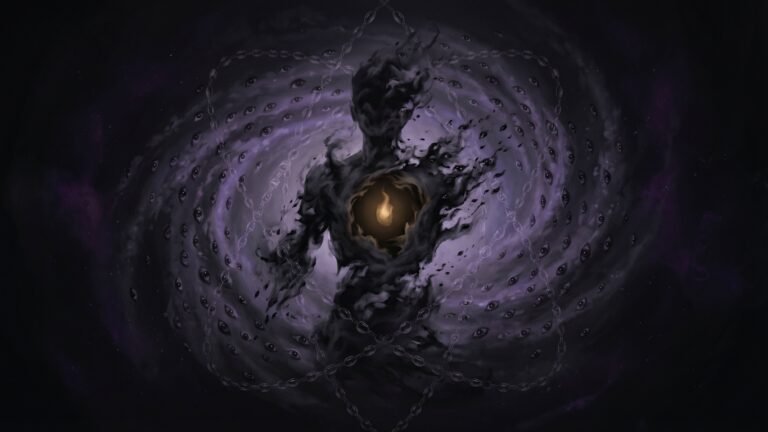
the self you show the self becoming अज्ञात व्यक्ति two shadows. one body.
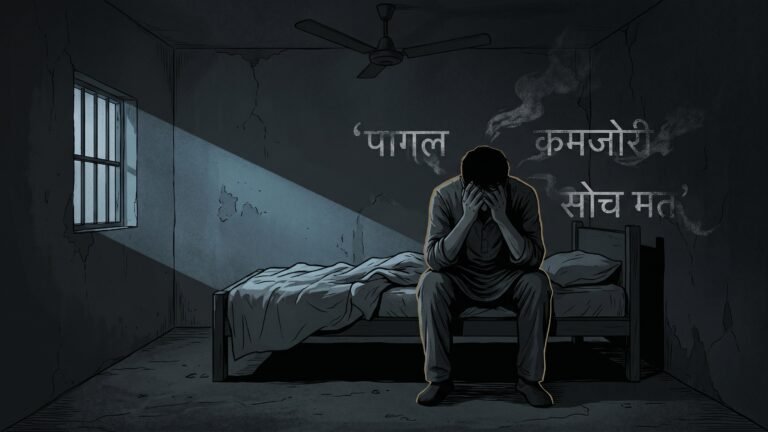
When no one is watching — no camera, no audience, no one to perform for — who do you become?
Not who you want to be. Not the version you rehearse in the mirror or construct carefully on a page. The actual one. The one that surfaces at 2 AM when the conversation ends and the room goes quiet. The one that shows up when there is no reward for being good, no punishment for being otherwise.
Most people never sit with that question long enough to get an honest answer.
— — —
The Performance We Mistake for Character
We are all, to some degree, performing. This is not cynicism — it is just the nature of being a social animal. We modify our voices in job interviews. We choose our words carefully around people we want to impress. We smile when we do not feel like smiling. We hold back the sharp thing we want to say.
This performance is not dishonesty. It is social lubricant. It is necessary. The problem arises when we begin to confuse the performance with the self. When we start believing that the curated version — the disciplined one, the generous one, the patient one we show in public — is the real one. And the other one, the impatient, petty, quietly resentful one that emerges alone — is some kind of aberration.
“The most exhausting thing in life is being insincere.” — Anne Morrow Lindbergh
It is not an aberration. It is information.
What you do when no one is watching is not your worst self leaking through. It is your current self — the actual one, unfiltered. And if there is a significant gap between that self and the one you present to the world, that gap is the most important thing about you right now.
— — —
The Private Tests Nobody Talks About
There are small moments every single day that reveal exactly who you are becoming. Not the grand moral choices — those are easy, because those come with an audience. The real tests are invisible:
Do you keep your word when no one would know if you broke it? Do you work with the same intensity when your manager cannot see you? Do you speak about someone the same way whether they are in the room or not? When you find someone’s lost phone with cash in it and no one is around — what do you do in the first three seconds, before you have a chance to construct a narrative about yourself?
Those three seconds are your character.
Not the carefully considered decision that follows. Not the story you tell about it later. The instinct. The automatic response before self-consciousness kicks in. That is what you have been building — quietly, invisibly, through every repeated choice you have made over years.
— — —
You Are Always Becoming Someone
Here is the thing most self-help writing gets wrong: it treats character as a fixed destination. Work hard enough, be disciplined enough, follow the right system — and you will become a good person. As if virtue is a place you arrive at and then stay.
It does not work that way. Character is not a state. It is a direction. You are always becoming something — and the thing you are becoming is determined almost entirely by what you do when no one is watching.
Every time you choose convenience over your stated values, you are practicing choosing convenience. Every time you hold yourself to a standard no one would enforce, you are practicing integrity. Both become habitual. Both become you.
This is simultaneously the most terrifying and the most liberating thing about human nature. Terrifying, because it means the small unobserved choices matter enormously — there is no such thing as a free pass when the audience is absent. Liberating, because it means you do not need anyone’s permission or witness to begin changing. The reconstruction of the self happens in private. It always has.
— — —
The Watcher You Cannot Dismiss
There is a concept that appears across almost every serious philosophical tradition — the idea that there is always a witness. Not God in the religious sense, not karma in the cosmic sense, but something more immediate and more unavoidable: you.
You are always watching yourself. And unlike every other audience, you cannot be fooled. You know when you chose poorly. You know when you took the easier path and told yourself a story to justify it. You know when the discipline you performed for others disappeared the moment they stopped looking.
This internal witness is not there to punish you. It is there to show you the gap — the distance between who you are performing and who you are actually becoming. The gap is not shame. The gap is a map.
What to do with the gap
Most people respond to the gap in one of three ways. They close their eyes to it — performing more convincingly to others until the performance becomes the only reality they acknowledge. They collapse into shame about it — treating the gap as evidence of a fundamental wrongness rather than a current condition. Or they get quietly, practically honest about it — and begin, without ceremony or announcement, to close it.
The third way is the only useful one. And it happens entirely in private.
— — —
Anonymous Integrity
There is a specific kind of discipline that has no name but deserves one. Call it anonymous integrity — the practice of holding yourself to standards that no one else would enforce, in moments that no one else would ever know about.
It is the writer who edits with the same rigour at midnight alone as they would if an editor were watching over their shoulder. It is the person who returns the extra change the cashier gave them by mistake, not because someone is watching but because the alternative — pocketing it and carrying the small weight of it — is not worth the ₹50. It is the person who keeps their promise to themselves first, before they worry about promises made to others.
Anonymous integrity is not heroism. It is maintenance. It is the quiet, unglamorous work of keeping the private self and the public self close enough together that you do not have to manage the distance between them. It is, in the most practical sense, the only form of freedom available to a person who takes their own character seriously.
— — —
The Honest Inventory
If you want to know who you are actually becoming, do not look at your intentions. Do not look at how you think of yourself, or what values you would list if someone asked. Look at the pattern of your unobserved behaviour over the last thirty days.
When you were alone and tired and nobody would know — what did you choose? When it was easier to cut a corner and the only cost was internal — did you cut it? When someone did something wrong that you could have addressed but chose not to because it was inconvenient — what did you tell yourself to justify the silence?
The answers are uncomfortable. That is exactly why they are useful.
The person you are becoming is not the person you intend to be. It is the person your habits are building — one unobserved choice at a time.
— — —
You will not always get it right in private. Nobody does. The point is not perfection in absence of audience — that is just a different kind of performance, performed for the self. The point is honesty. The point is knowing the difference between who you are and who you are trying to become, and choosing, again and again in the dark, to close the gap.
No one will applaud you for it. That is precisely what makes it worth doing.
Written by Agyat Vyakti — अज्ञात व्यक्ति. All authors on this platform write anonymously. The name is the identity.