“Every morning you wear the mask so well that by evening you have forgotten there was a face underneath.”
— Agyat Vyakti
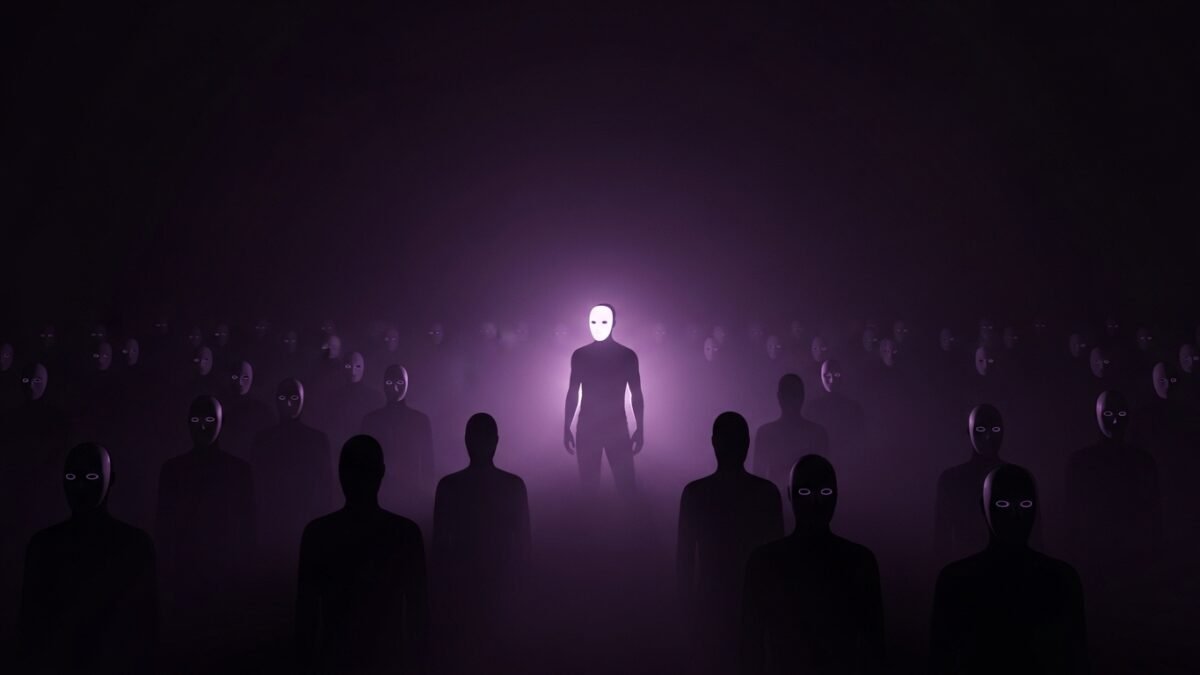
You know exactly how to be the version of yourself that other people need. At work you are confident, decisive, unshakeable. With your parents you are responsible, obedient, grateful. With your friends you are easygoing, funny, fine. Always fine. With strangers you project whatever image costs the least friction.
You have become so skilled at performance that you do it automatically now. No deliberate choice. No conscious effort. Just the smooth, practiced act of being whoever the room requires.
And underneath all of it, something is getting very, very tired. SOCIAL MASK PROFESSIONAL MASK FAMILY MASK you (buried) “I’m fine” “No problem” The further you are from the centre, the more exhausted you become
Carl Jung called it the Persona — and he warned us
Carl Jung, the Swiss psychiatrist who spent his life mapping the human psyche, gave this phenomenon a name: the Persona. Named after the masks worn by actors in ancient Greek theatre, the Persona is the face we construct for the world — the curated, acceptable, socially-approved version of ourselves that we present to survive in society.
Jung was not against the Persona. He understood it was necessary. You cannot walk through life being fully, rawly yourself in every interaction — that would be chaos. Some social performance is simply the cost of living among other people.
But Jung warned about one specific danger: when you become so identified with your Persona that you forget it is a mask. When you stop knowing where the performance ends and you begin. When the actor forgets they are acting.
That is when the mask stops being a tool and becomes a cage.
“The Persona is a kind of mask, designed on the one hand to make a definite impression upon others, and on the other to conceal the true nature of the individual.” — Carl Jung
The specific exhaustion of pretending
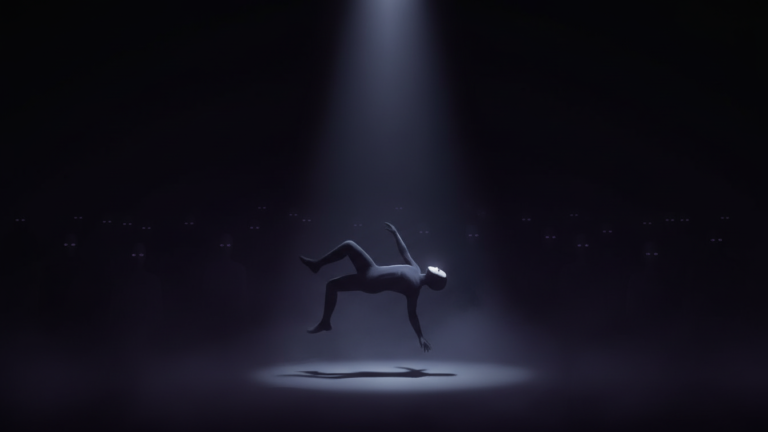
There is a specific kind of tired that has nothing to do with sleep. You can sleep ten hours and still wake up feeling it. It is the tiredness of constant self-monitoring. The cognitive load of always tracking: am I being too much? Not enough? Too honest? Too emotional? Too quiet? Too loud?
Psychologists call this self-monitoring — the degree to which you adjust your behaviour based on how you think others are perceiving you. High self-monitors are often very socially successful. They read rooms brilliantly. They say the right things. They are liked.
They are also, frequently, profoundly lonely. Because the person people like is not quite them. And they know it. Every compliment lands slightly wrong. Every close friendship has a ceiling — the point where they would have to show something real, and they don’t. Every relationship exists at a comfortable, managed distance.
You can be surrounded by people who love your Persona and feel completely, devastatingly alone.
How the killing happens — slowly, quietly
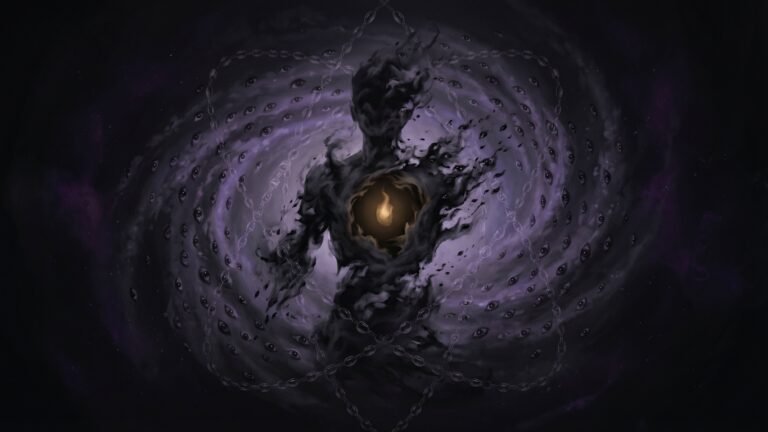
The title of this piece is not dramatic exaggeration. When you suppress your actual self long enough, something genuinely dies. Not dramatically. Not all at once. It happens the way a language dies — gradually, word by word, until one day you reach for something and it is no longer there.
You stop knowing what you actually want because you have spent so long wanting what you were supposed to want. You stop knowing what genuinely makes you happy because you have confused approval with joy for so many years. You stop trusting your own instincts because you have overridden them so many times in favour of what was expected.
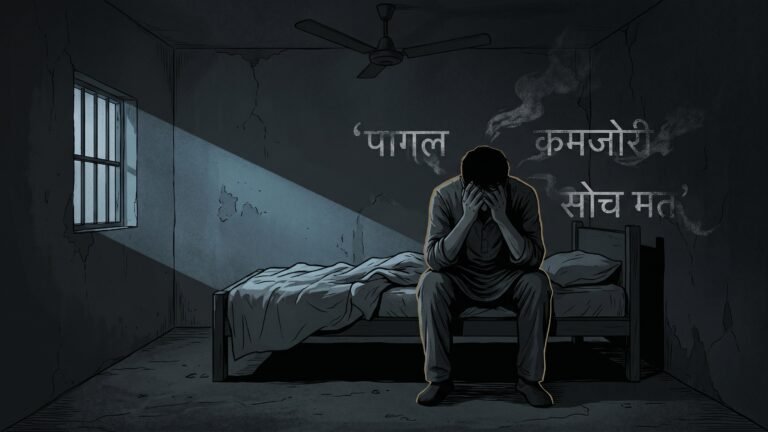
The person underneath the mask does not die loudly. They grow quieter. And quieter. Until their voice is just a whisper you can barely hear anymore — usually at 3am, when the performance is finally, mercifully over for the day. YOUR VOICE at the start AFTER YEARS of suppression SILENCE identity loss
📖
Recommended Read
The Gifts of Imperfection — Brené Brown
About letting go of who you think you should be and embracing who you are. Not a self-help book in the shallow sense — it is a research-backed, deeply honest examination of what authentic living actually costs and what it gives back.View on Amazon India →
Why you keep doing it anyway
Because it works. That is the honest answer. The mask works. It gets you approval, safety, belonging, advancement. The cost is hidden and deferred — you pay it later, in the private currency of exhaustion, loneliness, and that subtle feeling of unreality that comes with living a life that fits like someone else’s clothes.
The other reason: you are afraid of what happens if you take it off. What if people do not like the real version? What if the real version is not likeable? What if you remove the mask and there is nothing underneath — or worse, something messy and contradictory and uncertain?
Here is what most people who have done this work will tell you: the thing underneath the mask is not a polished, coherent, fully-formed self waiting to be revealed. It is confused and tender and sometimes embarrassing and often uncertain. And it is, without exception, more interesting than the mask.
The only direction worth walking
This is not the part where I tell you to burn everything down and live authentically in the mountains. That is a fantasy, not a philosophy. The Persona is not the enemy. You will always perform, in some contexts, to some degree. That is simply social life.
The question is whether you know where the performance ends. Whether there is at least one space — one person, one hour of the day, one private practice — where you do not perform. Where you are allowed to be uncertain. Where you are allowed to not know. Where the mask comes off and you sit, quietly, with the face underneath — however unfinished it might be.
Because the person you are pretending to be does not get tired — it is a construction, it has no feelings. But the person underneath does. They get tired. They get lonely. They need air.
Give them some.
The mask is not your enemy. But forgetting you are wearing it — that is the danger. That is where the slow death happens. And the slow return to life begins with remembering: there is a face underneath. It has been there the whole time. It is waiting, not impatiently, but with the particular patience of something that knows it has nowhere else to go.
You wrote this on a page no one was watching. You thought it alone, in the dark, when the performance was finally over. The fact that you are reading this — that you are even able to recognise what it is describing — means the person underneath is still there.
Still there. Still waiting. Still alive.
Written by
Agyat Vyakti — अज्ञात व्यक्ति
An unknown individual writing what most people feel but few admit.