“You are not tired because you are weak. You are tired because you have been strong for too long — inside a system that never asked if you could keep going.”
There is a particular kind of exhaustion that sleep does not fix.
You wake up after 8 hours and still feel hollow. You sit down to work and nothing moves. You used to care about things — deeply, genuinely — and now you look at those same things and feel nothing. Not sadness. Not frustration. Nothing.
That is burnout. And if you are reading this, there is a high probability you already know what it feels like from the inside.
What most people do not know is what burnout actually is — not as a vague feeling, but as a clinical reality with a documented cause, a predictable progression, and a path out that does not require you to simply “try harder.”
What Burnout Actually Is
In 2019, the World Health Organisation added burnout to the ICD-11 — the International Classification of Diseases. This matters because it means burnout is no longer an informal complaint or a sign of weakness. It is a recognised occupational phenomenon with a clinical definition.
WHO Definition — ICD-11
“Burnout is an occupational phenomenon resulting from chronic workplace stress that has not been successfully managed. It is characterised by three dimensions: feelings of energy depletion or exhaustion; increased mental distance from one’s job, or feelings of negativism or cynicism related to one’s job; and reduced professional efficacy.”
Three dimensions. Not one. This is important because most people only recognise the first — exhaustion. The second — the numbness, the cynicism, the feeling that nothing matters — is often mistaken for depression, laziness, or a personality change. It is none of those things. It is a predictable psychological response to sustained, unmanaged stress.
The third dimension — reduced efficacy — is the one that hurts most quietly. You stop believing you are capable. Tasks that once took you an hour take four. You question decisions you used to make without thinking. Confidence erodes not dramatically but steadily, like water on stone.
The Numbers Nobody Wants to Say Out Loud
Burnout is not a niche problem affecting a few sensitive individuals. It is a mass phenomenon that the data has been trying to communicate for years.

Read the Indian medical student data again. 86% reporting disengagement. 80% reporting exhaustion. These are people who studied for years to enter medicine. People who chose a profession out of genuine desire to help. And the system they entered consumed them before they even began.
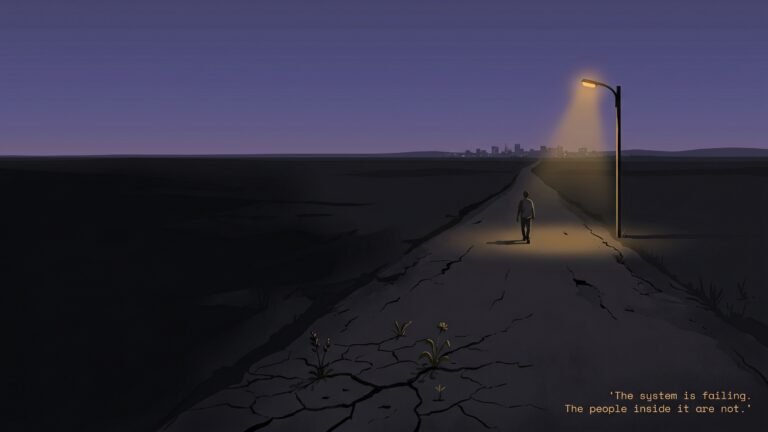
When 8 in 10 people in the same environment experience the same outcome, the problem is not 8 in 10 individuals. The problem is the environment.
“When 8 in 10 people in the same system experience the same breakdown — that is not a personal failure. That is a system producing its expected output.”
How Burnout Actually Builds — The Six Stages
Burnout does not arrive suddenly. It is a slow accumulation. Most people do not recognise it until they are already deep inside stage four or five — by which point the recovery takes considerably longer than it would have at stage one or two.

High energy, high commitment, high optimism. You take on more than you should. You say yes to everything. The warning signs are here — but they feel like enthusiasm.
The enthusiasm starts to feel unsustainable. Some days are harder than others. You notice fatigue more. You start forgetting small things. Sleep quality begins to decline.
Stress is no longer occasional — it is the baseline. You are perpetually behind. Deadlines feel impossible. You start skipping rest to catch up. Physical symptoms appear — headaches, stomach issues, frequent illness.
Emptiness replaces stress. Cynicism replaces care. You stop feeling like yourself. The work that once meant something now feels meaningless. You begin to doubt your abilities. Isolation increases.
The exhaustion becomes your normal. You stop expecting to feel better. Mental and physical symptoms are persistent. Depression and anxiety become harder to distinguish from burnout. This is the stage where professional support is not optional — it is necessary.
The body and mind force a stop. Collapse — physical, emotional, or both. Recovery at this stage takes months, not days. The system demanded everything and the system got it.
Why India Is Particularly Vulnerable
Burnout exists everywhere. But India has several compounding factors that make it particularly acute — and particularly unaddressed.
The productivity cult: Indian workplace and educational culture has historically equated long hours with virtue. “I work 16 hours a day” is said with pride, not concern. Rest is framed as weakness. Boundaries are framed as laziness. The person who never stops is celebrated — until they collapse.
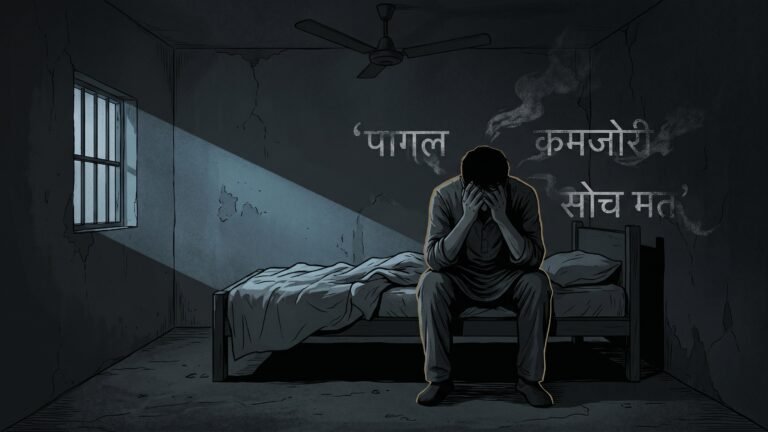
The silence around mental health: Burnout requires acknowledgement to be addressed. In environments where mental health is stigmatised — where “it’s all in your head” is a common response — people do not name what they are experiencing. They push through. They call it stress. They call it a bad phase. Until it becomes something that cannot be pushed through.
The pressure pipeline: India’s educational system feeds directly into the burnout pipeline. Kota. JEE. NEET. Board exams. The pressure starts at 15 and does not stop. By the time a young Indian professional enters the workforce, they have often been in a chronic stress state for years. Burnout in the first job is not a surprise — it is the continuation of a pattern that started in school.
No structural support: The ratio of psychiatrists to population in India is approximately 0.3 per 100,000 people. The WHO recommends 1 per 100,000 minimum. The gap between the scale of the problem and the availability of support is not a gap. It is a chasm.
What Recovery Actually Requires
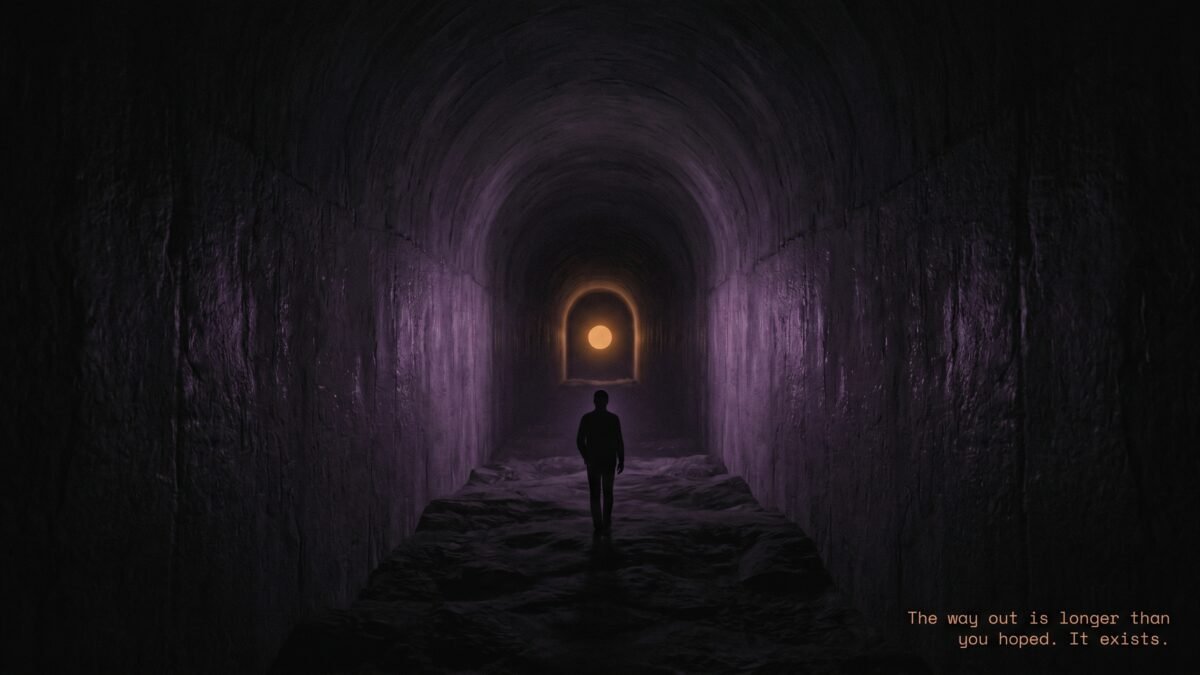
Recovery from burnout is not a weekend. It is not a vacation. It is not meditating for 10 minutes a day. These things can support recovery — but they are not recovery itself.
1. Removal or reduction of the stressor. As long as the thing that caused the burnout continues at the same intensity, recovery is not possible. This is the hardest part — because the stressor is often your job, your degree, your family situation. You cannot always remove it. But you can sometimes reduce it, redistribute it, or change your relationship to it.
2. Recovery behaviours that are genuinely restorative. Research distinguishes between passive recovery (watching content, scrolling) and active recovery (movement, time in nature, genuine social connection, creative activity). Both have a role — but passive recovery alone does not rebuild a depleted nervous system.
3. Professional support for stages 4 and above. At habitual burnout and beyond, cognitive distortions are already established. These do not resolve through willpower or positive thinking. They require a trained professional to help dismantle them systematically.
Recovery timelines — research-based
- Mild burnout (stages 1–2): 2–4 weeks with genuine rest and stressor reduction
- Moderate burnout (stages 3–4): 3–6 months with structured support and lifestyle changes
- Severe burnout (stages 5–6): 6 months to 2 years — professional therapeutic support is necessary

The Thing That Needs to Be Said
Burnout is framed as an individual problem because that is more convenient for the systems that cause it. If burnout is your fault — your inability to cope, your weakness, your poor time management — then the system does not have to change. Only you do.
But when 52% of a workforce is burned out, the workforce is not weak. The conditions are wrong. When 86% of Indian medical students are disengaged, they did not all individually fail to cope. The system is extracting more than a person can sustainably give.
This does not mean you are helpless. It means you are not to blame. And that distinction matters — because the guilt and shame that accompany burnout are part of what makes it worse. You cannot recover from something you believe is your fault while the thing that caused it continues unchanged.
You are not lazy. You are not weak. You are not broken. You are a person who has been asked to run without stopping — by a system that never intended to stop for you. Recognising that is not an excuse to do nothing. It is the first true step toward doing something that actually works.
If you are in the later stages and need to talk to someone
- iCall (TISS): 9152987821 — free, trained counsellors, confidential
- Vandrevala Foundation: 1860-2662-345 — 24/7, multilingual, free
- NIMHANS helpline: 080-46110007 — Monday to Saturday
- iMind: available online — text-based support for those who find speaking difficult
Rest is not the opposite of productivity. It is the condition that makes productivity possible. A system that cannot rest cannot sustain. And you are not a system. You are a person — and persons require more than output to survive.
— Agyat Vyakti
burnout, burnout India, burnout mental health, workplace burnout India, student burnout India, burnout recovery, chronic stress India, burnout signs, burnout stages, burnout explained, mental exhaustion, WHO burnout definition, ICD-11 burnout, burnout six stages, burnout vs depression, millennial burnout, gen z burnout, burnout young professionals India, burnout medical students India, burnout not weakness, burnout cause system, hustle culture burnout, productivity burnout India, burnout awareness India, mental health India, burnout helpline India, how to recover burnout, burnout research data, agyatvyakti mental health